
• Cleaning Machines
    • Pulse Wave
    • Continuous Wave
    • Applications
    • Industries
    • Gallery
    • FAQs
    • Training
  • Welding Machines
    • NOVAWELD™ Core Series
    • NOVAWELD™ Titan Series
  • Laser Safety
    • Safety Gear & Courses
  • Company
    • Contact Us
    • Blog
  • Speak With An Expert
  • Financing

October 24, 2025 by nuwavelaserdev

The Challenge of Rust

What if you could erase rust in seconds without chemicals, abrasives, or damage to the base metal? From automotive frames to aerospace components and heavy industrial machinery, rust silently threatens performance, safety, and longevity. Traditional rust removal methods, such as mechanical abrasion, chemical treatments, and blasting, often carry drawbacks: they can damage the base material, produce hazardous waste, or require extensive labor and masking. That’s where laser rust removal comes into play. At Nuwave Laser, we believe laser-based approaches represent the next generation of surface restoration, combining precision, safety, and efficiency.

What Is Laser Rust Removal?

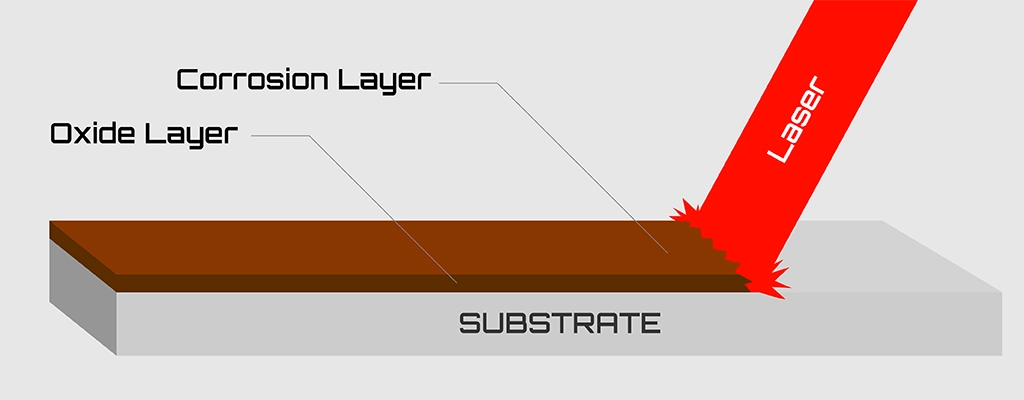
Laser rust removal is a non-contact cleaning technique that uses focused laser energy to vaporize or dislodge oxide and corrosion layers from metal surfaces while leaving the base metal intact. The laser’s wavelength and pulse characteristics can be tuned so that it targets the rust (or oxide) preferentially, avoiding damage to the underlying substrate. And because the process is so controllable, you can remove rust from complex geometries, tight edges, or delicate parts that might be damaged by abrasive or chemical methods.


Whether you are doing light restoration on small parts or large-scale industrial surface prep, Nuwave’s laser machines are engineered to deliver consistent performance across a spectrum of power levels. Our U.S.-based support team ensures your laser systems stay optimized, because uptime is critical in any production environment.

Why Use a Laser Cleaning Machine for Rust Removal?
Precision and Selectivity

One of the biggest advantages of a laser rust removal system is precision. Since the laser can be controlled with fine resolution, you can target rust and corrosion layers without harming the base metal. Unlike sandblasting or abrasive methods (which may overshoot or gouge), a rust removal laser is selective and minimally invasive.
Minimal Secondary Waste

Many traditional rust removal methods create residues like abrasive grit, chemical runoff, or dust, which require containment. Laser cleaning largely avoids these issues. The removed material is often captured via extraction systems or vacuum, greatly reducing cleanup and disposal costs.

Safe and Environmentally Friendly

Rust removal lasers eliminate the need for harsh acids, solvents, or corrosive chemicals, making the process safer for operators and the environment. Many industries have strict regulations around chemical disposal; laser rust removal helps you stay compliant while maintaining high standards of cleanliness.

Versatility Across Substrates

Whether the base metal is steel, stainless steel, aluminum, or more exotic alloys, a properly tuned laser system can clean rust or oxide layers from many materials. Because the laser doesn’t physically contact the surface, it can handle intricate shapes, weld seams, corners, and internal recesses more easily than mechanical tools.

Common Applications of Laser Rust Removal

Industrial Equipment: Large components in factories, turbines, molds, or construction equipment are often subject to corrosion in harsh environments. Laser rust removal offers a way to restore these parts without disassembly or exposure to harsh chemicals.

Automotive: In the automotive sector, parts like frames, brackets, rails, or underbody components may accumulate rust over time. With a rust removal laser, these parts can be cleaned precisely without compromising tolerances or coatings.

Aerospace: For critical components in aerospace, maintaining the integrity of alloys and ensuring low surface roughness is paramount. Laser rust removal can clean corrosion from landing gear, structural parts, or brackets with minimal risk to the underlying material.
 

Choosing the Right Laser System for Rust Removal

To get effective results with a rust removal laser, you must consider several key factors:

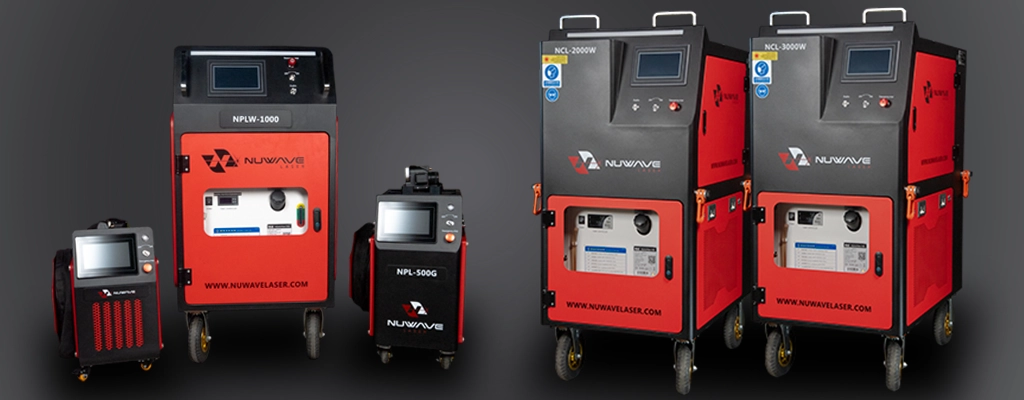
  • Power & Peak Intensity: Higher wattage, in the 2000-3000 watt range, may be necessary for efficient cleaning of thick corrosion or large surfaces.
  • Pulse vs. Continuous Wave: While pulsed lasers excel at precision cleaning on delicate materials, continuous wave (CW) systems are generally preferred for rust removal. CW lasers provide steady, uniform energy for efficient oxide breakdown across larger surfaces.
  • Beam Delivery & Scanning: The method of directing the laser affects reach, speed, and access to complex geometries.
  • Cooling & Duty Cycle: For industrial throughput, you need a system designed for continuous or high-duty-cycle use without overheating or failure.
  • Extraction & Filtration: Rust removal generates particulates and vaporized oxides. Proper extraction and filtration systems are critical for operator safety and maintaining a clean work environment.
  • Operator Safety & Controls: Interlocks, shielding, safety enclosures, and software control all factor into a reliable, safe system.

At NuWave Laser, our laser cleaning machines combine high power, precision scanning, and advanced cooling to remove corrosion quickly and cleanly across a wide range of metals. Each machine is built for consistent performance in demanding industrial environments, supported by U.S.-based service to keep your operation running smoothly.

Overcoming Misconceptions

Some may assume that a rust removal laser is prohibitively expensive or too exotic for everyday use. In reality, the long-term cost savings from reduced labor, consumables, waste handling, and rework often justify the investment. Others might believe laser cleaning machines are too risky or damaging. However, our systems incorporate safety interlocks and modes to prevent harm to the substrate or operator.

Another misconception is that laser cleaners are only for small parts. While some desktop models exist, industrial-scale laser cleaning systems (100s to 1,000s of watts) can handle larger assemblies and heavy-duty components. At Nuwave Laser, our scalable lineup makes laser rust removal accessible across varied sizes and industries.

Best Practices & Tips for Effective Laser Rust Removal

  • Do a small test first. Always run a test on a representative piece to confirm optimal parameters before continuing to a full-scale cleaning.
  • Adjust in layers. Remove rust gradually rather than blasting at maximum power. This avoids overshooting into the base material.
  • Maintain your focus and positioning. Ensure consistent distance and angle to prevent hot spots or uneven cleaning.
  • Use proper ventilation. Always operate with appropriate fume extraction or vacuum to capture particulate and protect the operator.
  • Monitor heat build-up. Especially for thin parts, avoid prolonged stationary exposure to prevent warping or discoloration.
  • Keep optics clean. Dust or contamination on optics can reduce laser effectiveness.

Partner with Nuwave Laser for Expert Rust Removal 

In industries where surface integrity, turnaround time, and contamination control matter, our laser rust removal technologies offer a compelling alternative to traditional methods. The precision, safety, efficiency, and minimal waste profile make laser cleaning a forward-looking investment.

If you’re evaluating ways to modernize your rust removal processes or need help selecting the right system, Nuwave Laser is ready to help. Contact us to test your parts in our lab, explore system options, or schedule a proof-of-concept demo.

Filed Under: Laser Cleaning

October 9, 2025 by Daelyn

The laser cleaning market is experiencing a compound annual growth rate (CAGR) of 5.57% and will grow by over $200 million over the next five years. Why? Everyone is catching on to the versatility of laser cleaning machines.

Not sure if you should make the swap? Here are some reasons why you need to invest in industrial laser cleaning machines.

1. You Can Clean Better & Faster

One of the top reasons to choose a laser machine is that it’s efficient and precise. Traditional cleaning methods can be time-consuming, and they require a ton of elbow grease. Lasers offer unmatched speed and accuracy.

Your team can use the laser beam to target and remove contaminants like:

  • Rust
  • Paint
  • Residue

They won’t have to worry about damaging the underlying material. Instead, they can focus on getting the job done. Lasers are efficient at getting rid of all debris, ensuring the machine’s surface is prepped for repainting or reconditioning.

2. Laser Cleaning Is Good for the Environment

Laser cleaning is an eco-friendly alternative to many conventional methods. You can ditch the harsh chemicals and all of that harmful waste they produce. You don’t need any solvents or chemicals to clean with lasers. All you need is a reliable machine from a reputable company like Nuwave.

Your machine generates minimal waste, making it a cleaner and more sustainable option. If your business wants to reduce its impact on the planet, switching to lasers is an easy call.

3. You’ll Save Money

Every business owner wants to save money. Lasers can unlock savings along multiple fronts. While your machine will require an upfront investment, you’ll reduce your equipment and chemical costs in the long run. You won’t need to purchase consumables like brushes, hand tools, and sandpaper. All you’ll need is a laser machine.

You can enjoy indirect savings by extending the service life of critical equipment. You can use the laser to remove rust and other contaminants that may lead to breakdowns or service disruptions.

4. Laser Cleaning Machines Are Safe and User-Friendly

Lasers aren’t just great for the planet and your wallet. They are also safe and user-friendly. Your team won’t have to work with harmful chemicals or sharp and abrasive tools.

Modern laser cleaning systems are loaded with safety features designed to protect operators. With a little training, your team can safely and efficiently use lasers to perform all sorts of cleaning and reconditioning tasks.

5. Top Machines Are Versatile

Systems from Nuwave are incredibly versatile. You can remove rust from metal parts, strip paint, and tackle a wide range of other tasks.

Clients in many industries use laser cleaning solutions. A few examples include manufacturing, automotive, aerospace, and restoration.

6. You Can Minimize Surface Damage

Traditional cleaning methods can be abrasive and cause wear and tear on surfaces. Over time, this can lead to damage and degradation of your equipment.

Laser cleaning is a non-contact process that protects surfaces and the underlying metals. You can get rid of harmful rust and contaminants without shortening the service life of your equipment.

7. Your Team Will Get More Done 

Laser machines provide an efficient way to remove debris and prepare surfaces for resurfacing. Your team can use lasers to complete projects faster and get your equipment back up and running sooner.

The increased speed allows you to handle more projects in less time. In turn, you will enjoy long-term productivity gains and may even be able to increase profitability.

Connect With Nuwave Laser Cleaning 

Want to experience the benefits of laser cleaning for yourself? Nuwave can help! Our team of experts specializes in industrial lasers. We are a family-owned business that is committed to exceptional service. Our team will help you find the ideal machine for your budget and intended use case. Contact us about your laser cleaning needs!

Filed Under: Laser Cleaning

September 18, 2025 by Daelyn

If you’re looking for a better way to blast through rust and surface contaminants, industrial laser cleaning machines may just be the ideal choice. There’s just one thing standing between you and exceptional cleaning efficiency, and that’s figuring out which piece of equipment will be the best fit for your business.

Spec sheets can often look as though they’re written in a foreign language, which makes identifying the numbers and details you should be paying attention to virtually impossible. With that in mind, here are the most important attributes to consider:

Power Output

Most laser machines highlight their power output in terms of wattage (W). That makes sense, as watts indicate how much power the machine produces. Higher-wattage equipment can handle tougher materials and a wider range of surfaces.

Pulse laser cleaning machines typically have wattages ranging from 100W to 500W (or higher). Machines on the lower end of that spectrum can remove thin layers of rust or paint. They are versatile tools and are a great option for removing contamination from delicate surfaces.

Mid-power devices can produce 200W-300W beams that efficiently blast through multiple layers of oxidation or stains. Thicker layers of paint or corrosion will likely require a device with a 500W+ output.

Wavelength

A laser’s wavelength affects its ability to interact with different materials. Most machines operate in the nanometer (nm) range. Common wavelengths include 1064 nm and 1070 nm, which are capable of removing thicker contaminants from materials such as metal, stone, and plastic.

While some devices generate lower wavelengths, like 532nm, it’s generally best to choose a machine that leverages 1064 nm or 1070 nm. These devices are more versatile and can handle a wider range of surfaces.

Pulse Duration and Frequency

Duration refers to the amount of time the beam remains active during each pulse, and frequency refers to how often these pulses occur. Most machines you encounter will be classified as either pulsating or continuous waves.

Pulse machines are better suited for small to mid-sized projects. They have an adjustable frequency, which will be expressed in kilohertz (kHz). Continuous wave laser cleaning devices are best used for large-scale oil stains, paint, and corrosion.

Portability

If you need to transport your device between job sites, it’s best to choose a smaller and easy-to-move device. You don’t want your team lugging around a big bulky machine for small cleaning jobs, after all.

Identify the dimensions and weight of a machine before making your purchase. From there, consider the space you’ll be operating and whether portability matters for your business.

If you aren’t concerned with transporting the device, though, prioritize other attributes like power, wavelength, and pulse duration. Larger machines will provide better versatility and cleaning efficiency.

Safety Features

Safety should always be a top priority when choosing a laser cleaning machine. Look for devices with built-in features like automatic shutoff mechanisms, protective housings around the laser, and user-friendly controls.

Ease of Use

You don’t want a device that’s hard to use. Choose a platform with a simple interface so you can easily educate your team on its functionality and safe use. Minimizing the learning curve will help your staff quickly acclimate themselves to the machine and reduce the risk of an accident.

Explore Nuwave Equipment 

If you’re not sure which solution will be right for you, the experts at Nuwave have you covered. Schedule a consultation, and let’s chat about your intended use case and machine requirements. We’ll help you identify the ideal platform for your business.

Filed Under: Laser Cleaning

August 26, 2025 by Daelyn

Laser cleaning offers a cost-effective, efficient, and green alternative to traditional practices that involve caustic cleaning products. However, it’s important that you choose a laser-cleaning solution that emits enough power.

How Is Laser Power Measured?

Laser machines always talk about power output in terms of watts or wattage. A watt represents the rate at which a machine uses or produces power. Think of watts like miles per hour for electricity.

A vehicle traveling 100 miles per hour is moving much faster than a car cruising along at 50 miles per hour. Likewise, a laser emitting 500W of power is emitting more energy at a faster rate than a device set at 200W.

Common Wattage Options

Most laser cleaning machines have adjustable power outputs. This feature allows you to choose the appropriate wattage for your intended use case. Lower wattage settings are good for routine cleanings and stain removal. Higher power modes (e.g., 500W) can take care of tougher stains and remove oxidation from different surfaces.

If you aren’t sure which setting to use, it’s best to start on a lower power mode and work your way up. Using a setting that’s too low won’t damage the surface or machine you are cleaning. On the other hand, starting with too much wattage could remove too many layers at once and damage the underlying surface.

Here’s a look at three common power settings so you can get a better idea of when to use each mode.

100W 

100W laser cleaning machines are ideal for light-duty applications and delicate surfaces. They offer precision cleaning and can easily remove rust, paint, and contaminants from a wide range of surfaces. The machine packs enough punch to clean effectively without damaging the substrate.

A 100W system excels in smaller tasks. The machine won’t consume much power and is cost-effective to operate. It may struggle with set-in stains or deep oxidation that goes beyond the surface level of the material. That’s why it’s a good idea to invest in an adjustable laser that comes with a broad range of power outputs.

200W

200W laser cleaning machines pack a little more punch than 100W devices. They can handle a wider variety of tasks like removing surface contaminants or cleaning thicker rust and coatings.

With a 200W system, you can clean efficiently and still protect the substrate. This power level also allows for better speed than 100W settings. However, you may need a 500W laser for extremely tough cleaning jobs.

500W

500W machines are a go-to solution for industrial cleaning tasks. You’ll be able to blast through oil, grease, grime, oxidation, and more. A 500W laser can also take care of commercial-grade paint and most other substances you’ll encounter in an industrial setting.

One of the biggest advantages of 500W lasers is their efficiency. Your team can take advantage of the device’s high power output to knock out big projects quickly and effectively.

How Powerful Are Industrial Laser Cleaning Machines?

Pulse wave laser machines emit power ranging from 100W to 1,000W. Continuous wave laser cleaning machines are much more powerful, with average output capabilities ranging from 2,000W to 3,000W.

Pulse machines are best suited for cleaning rust, oil stains, oxide films, and other debris or coatings off of various surfaces. Continuous wave options can perform complete steel stripping and de-rusting. They are a great option when you need a lot of power to prepare a surface for resurfacing.

Power Your Laser Cleaning Efforts With Nuwave 

Nuwave Laser Cleaning offers a huge selection of industrial and commercial-grade machines. Need help choosing the right option for your business? Speak with one of our experts.

Filed Under: Laser Cleaning

July 17, 2025 by Daelyn

Tired of dealing with caustic chemicals every time you need to remove rust or stains from a surface? It’s time for an upgrade.

Industrial laser cleaning machines can be an invaluable addition to your company. They blast away grime and rust with a beam of light.

You can use the beam to clean a wide range of equipment and surfaces. Ready to start cleaning? Not so fast. You’ve got to figure out which system will be the best fit for your business.

There are two main types of machines: pulse and continuous wave. Here’s a look at each piece of equipment and the unique advantages they provide.

What’s a Pulse Laser Cleaning Machine?

Pulse lasers operate by emitting short, high-intensity bursts of energy. These pulses typically last for a few nanoseconds or microseconds. The highly concentrated beam can effectively vaporize contaminants without causing damage to the underlying material.

Pulse laser cleaning machines use the technology to facilitate the precise removal of debris and contaminants. Your team members can work in tight spaces and remove rust or other material from machinery without damaging the underlying surface (the substrate).

Key Benefits of Pulse Lasers

You can use a pulse laser to clean surfaces with surgical precision. The quick burst of energy helps prevent overcleaning and allows you to target specific areas of concern on a piece of equipment or surface.

Since the machine releases energy in short bursts, it emits much less heat and operates with greater electrical efficiency. Pulse lasers are cost-effective to operate and maintain, making them an excellent long-term investment.

Users appreciate the versatility of pulse machines. They are used in a wide range of industries, including the automotive and aerospace fields.

What’s a Continuous Wave Laser Cleaning Machine? 

Continuous wave laser cleaning machines emit a steady beam of energy rather than short pulses. They are more powerful and can complete jobs much faster due to the continuous operation. However, it’s important to use that power wisely.

Continuous wave laser machines can provide too much penetration and remove surface material too quickly if you are not careful during operation. Fortunately, high-end options such as those provided by Nuwave have user-friendly controls that allow your team to adjust power settings with precision.

Advantages of Continuous Wave Laser Cleaning Machines 

Continuous wave devices are incredibly efficient. Your team can tackle large projects with ease, making these machines ideal for industrial-scale operations. They are especially effective for removing thicker coatings and contaminants.

The continuous energy output allows CW lasers to work efficiently on tough materials like metals and thick protective coatings. You can use them to prep surfaces for reconditioning.

High-end machines also include user-friendly interfaces and provide a high level of customizability. Your team will be able to adjust the power output and other criteria for a precise cleaning experience.

Which Machine Should You Choose? 

Both devices are great options for removing various stains and contaminants. However, each has a slightly different purpose. Pulse laser machines are best suited for tasks like:

  • Gear surface rust removals
  • Weld seam cleaning
  • Oil cleaning

Continuous wave machines are a better fit when you need to perform:

  • De-rusting
  • Plate de-rusting
  • Steel stripping

Continuous wave devices are more powerful and penetrate to a greater depth, allowing you to tackle tougher jobs. Pulse machines are ideal for removing thin layers of rust and contaminants on a small scale.

Ready to Order Yours? We’ve Got You Covered

Need a hand choosing the right laser cleaning machines for your business? Contact Nuwave and speak with an expert.

Filed Under: Laser Cleaning

  • Cleaning Machines
    • Pulse Wave
    • Continuous Wave
    • Applications
    • Industries
    • Gallery
    • FAQs
    • Training
  • Welding Machines
    • NOVAWELD™ Core Series
    • NOVAWELD™ Titan Series
  • Laser Safety
    • Safety Gear & Courses
  • Company
    • Gallery
    • FAQs
Contact Us

(210) 987-5671

9012 FM 1976

Ste. 204
Converse, TX 78109

  • Privacy Policy
© 2026 Nuwave Laser. All rights reserved.